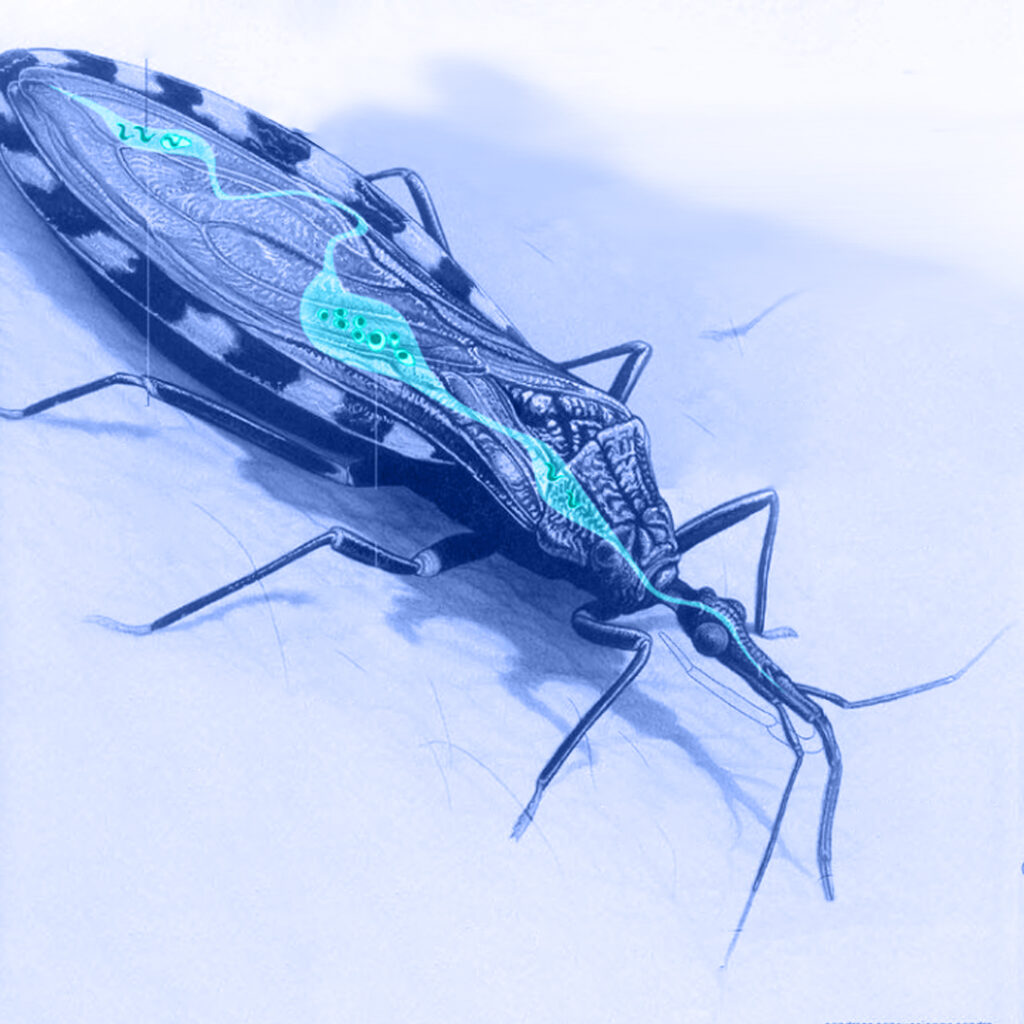
Also called American trypanosomiasis, Chagas disease is an inflammatory and infectious disease caused by a parasite called Trypanosoma cruzi. This parasite is found in the feces of the Triatomine insect (reduviid), popularly known as the «kissing bug.»

Chagas disease is common in South America, Central America, and Mexico, the main home of the Triatomine bug, but rare cases of Chagas disease have also been found in the southern United States.
Chagas disease can infect anyone, and if left untreated, it can cause serious heart and digestive problems.
During the acute phase of infection, treatment for Chagas disease focuses on killing the parasite, but there are cases where the disease becomes chronic for the patient. Treatment in this final phase is about controlling the signs and symptoms, as well as taking steps to prevent infection.
In Latin America, it is estimated that there are nearly 100 million people at risk of infection, about 6 million with the infection, 30,000 new cases annually from all forms of transmission and figures that reach 12,000 deaths annually due to this disease. These figures make Chagas disease a focus of public policy development in health matters, as well as in the areas of research, treatment and detection.
Considered a «silent and silenced disease», since most infected people have no symptoms or very mild symptoms. Early detection is essential to start timely treatment and avoid serious complications, such as heart and digestive problems, among others.
Last Sunday was World Chagas Day, which aimed to give visibility and attention to this disease. It is important to raise awareness in the population about this disease, its detection and possible treatment before reaching the chronic limit. In addition, it is necessary to advance health policies to achieve the expansion of diagnosis coverage and equitable access to clinical care for Chagas.